Mead Brewing
Mead is one of the oldest alcoholic drinks in the world, often called “honey wine.” At its core, it’s simply fermented honey mixed with water, but it can be as simple or as fancy as you want. People have been making mead for thousands of years, and it shows up in myths, medieval feasts, and even modern craft brewing circles.
Making mead starts with three basics: honey, water, and yeast. You mix honey and water to create what’s called a “must,” then add yeast to kick off fermentation. The yeast eats the sugars in the honey and turns them into alcohol over time. Depending on the recipe, you can add fruits, spices, or herbs for extra flavor—think berries, cinnamon, or even lavender.
Once it’s fermenting, patience is key. Mead can take anywhere from a few weeks to several months to fully develop its flavor. After fermentation, it’s usually aged to smooth out the taste. The result? A drink that can be sweet, dry, sparkling, or still—perfect for sipping at a game night or a cozy evening.
History of Mead
Ancient Origins. Mead is often called the world’s oldest alcoholic drink. Archaeological evidence shows that people were fermenting honey with water and wild yeast as far back as 7000 BCE in China. It also appears in ancient cultures across Europe, Africa, and Asia—long before beer or wine became common.
Myth and Tradition. Mead was a favorite in Norse and Celtic societies, often linked to gods, warriors, and celebrations. It shows up in myths like the Norse “Mead of Poetry” and was a staple at feasts in medieval halls. In many cultures, it was considered a drink of honor and even thought to have magical or healing properties.
Modern Revival. While mead faded in popularity after beer and wine took over, it’s making a big comeback today. Craft meaderies are popping up worldwide, experimenting with flavors like fruit, spices, and herbs. From ancient drink to modern trend, mead has truly stood the test of time.
Basic Mead Recipe
Equipment
- Fermenter: A fermenter is simply the vessel used to ferment in. The container needs to me clean and able to be sealed with an airlock. You can use a large glass jug, or the plastic gallon jug of water (Only use the plastic jug if it is new, and unopened. If already opened it cannot be sterilized and used again.
- Another sterilized container: Another container is needed to transfer or mix the solution.
Airlock: An airlock is used to let gasses escape durring fermentation, but prevent air from getting in. There are many kinds of airlocks and methods for fermentation. A simple way to make an airlock is to use a rubber balloon with a pinhole, stretched over the opening of the jug. The pinhole will open when the pressure starts to inflate the balloon. 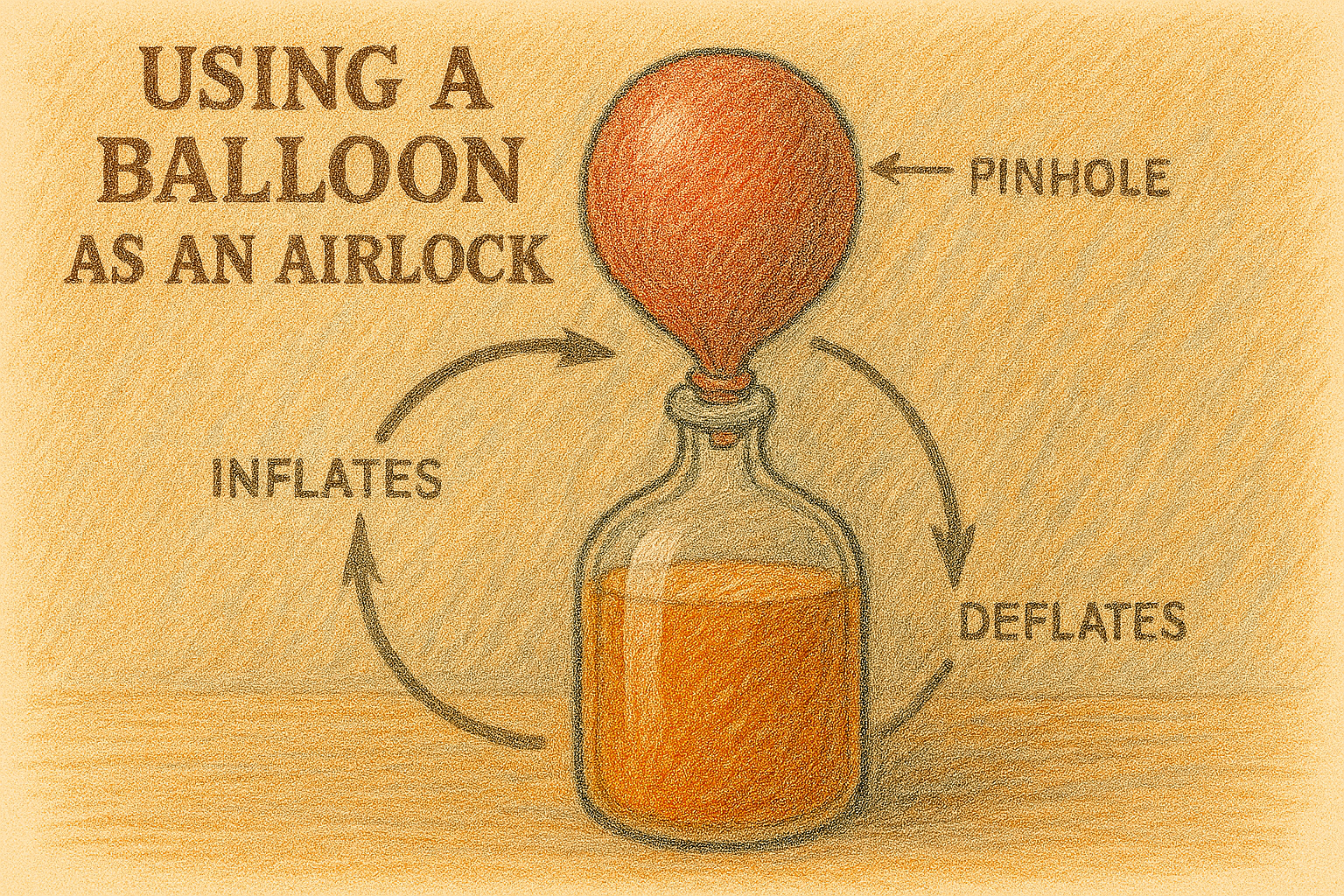
Ingredients
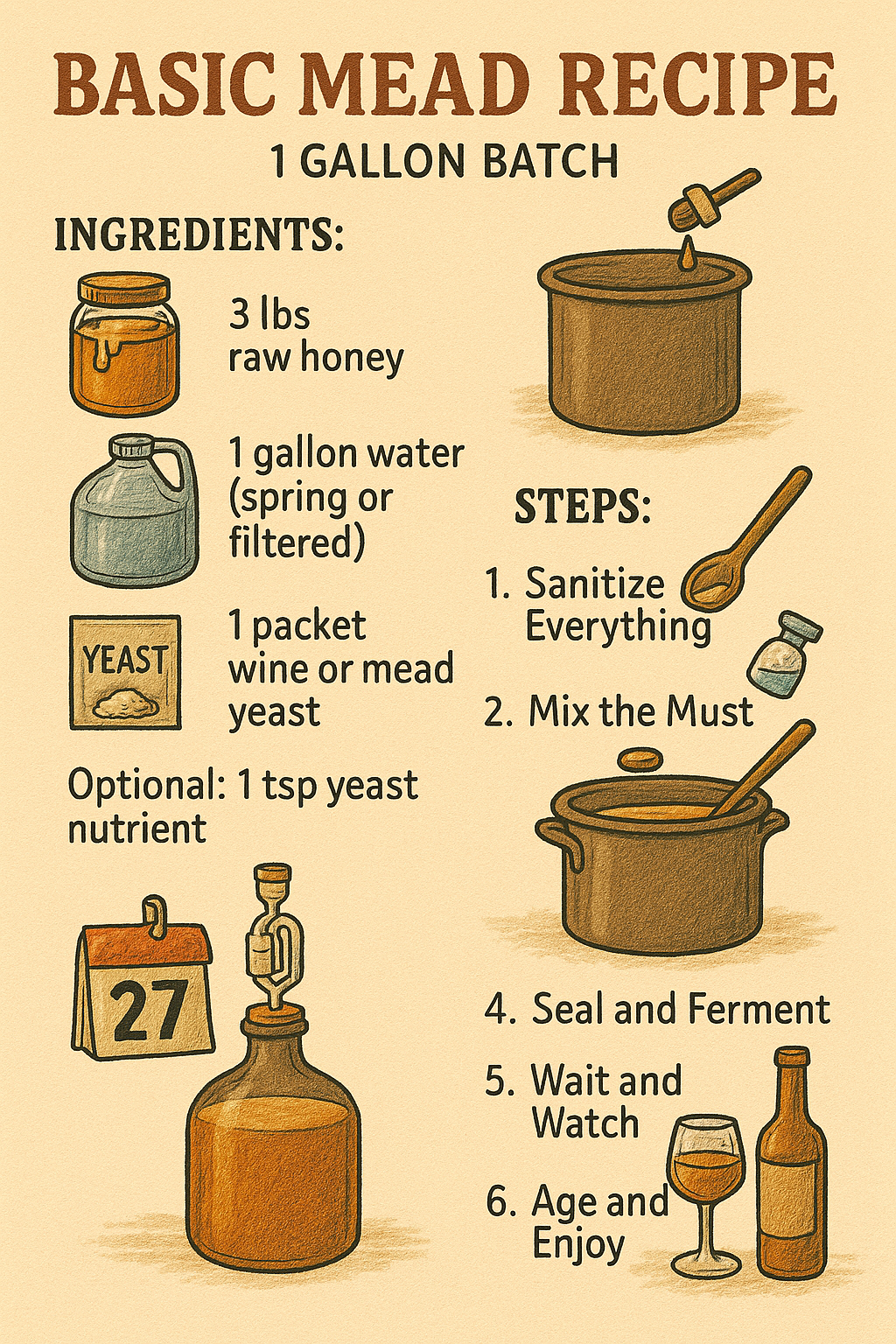
- 3 lbs (about 1 quart) of raw honey
- 1 gallon of water (spring or filtered)
- 1 packet of wine or mead yeast. I like to use Champagne Yeast. (Lalvin D-47 or EC-1118 are popular)
- Optional: 1 tsp yeast nutrient (helps fermentation)
Steps
- Sanitize Everything – Clean your fermenter, spoon, and any tools. This is super important to avoid funky flavors.
- Mix the Must – In your fermenter, combine honey and about half the water. Stir until the honey dissolves, then add the rest of the water.
Optional: In a large stock pot heat the water to dissolve the honey. Let cool before returning water solution to your fermenter. - Add Yeast – Sprinkle the yeast on top (rehydrate if the packet says so). Add yeast nutrient if you have it.
- Seal and Ferment – Put on an airlock and store the fermenter in a cool, dark place (around 65–70°F).
- Wait and Watch – Fermentation usually takes 2–4 weeks. When bubbling stops, it’s time to rack (transfer) into a clean container and let it age.
- Age and Enjoy – Mead tastes better with time! Age for at least 2–3 months (longer is even better), then bottle and enjoy responsibly.